Winter Crafts for Adults

When the days get shorter and you want a cozy project that actually turns out well, winter crafts for adults are the sweet spot. You get the calm of making something with your hands plus a finished piece you can display, gift, or use to make your home feel warmer. This guide focuses on beginner-friendly winter crafts that do not require fancy tools, but still look polished. I will walk you through practical material choices, set-up tips, step-by-step methods, and the small finishing details that make a craft look handmade in the best way, not the messy way. Whether you want a quick evening project or something you can work on over a weekend, you can choose an idea that fits the time and materials you have available.
Easy Winter Crafts for Adults
Paper Snowflakes and Stars
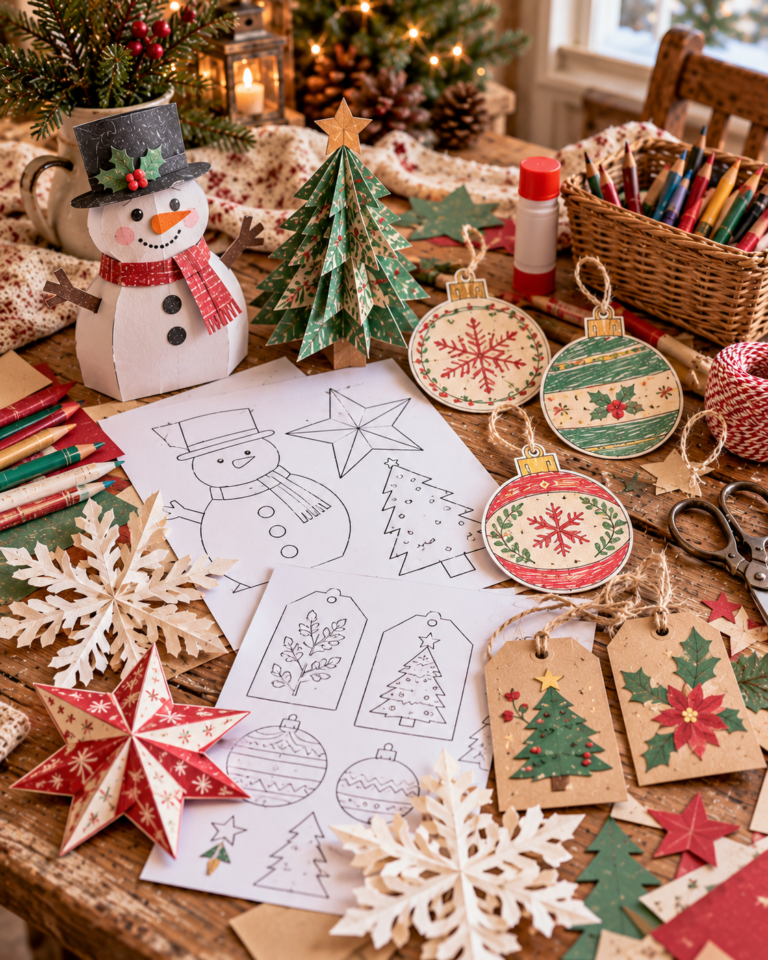
Paper snowflakes are quick, inexpensive, and surprisingly satisfying. Use standard printer paper for practice and upgrade to heavier white paper or metallic paper for crisp points. Fold carefully and keep edges aligned; symmetry comes from accurate folds. Small, sharp scissors are easier than large ones for tight cuts. If you want stars, start with a square and fold into wedges, then snip angles along the outer edge.
Finishing tip: If your snowflakes curl after unfolding, place them beneath a clean sheet of paper and a heavy book until they lie flatter. For hanging, punch a small hole near one edge and add lightweight thread or string.
Winter Wreaths
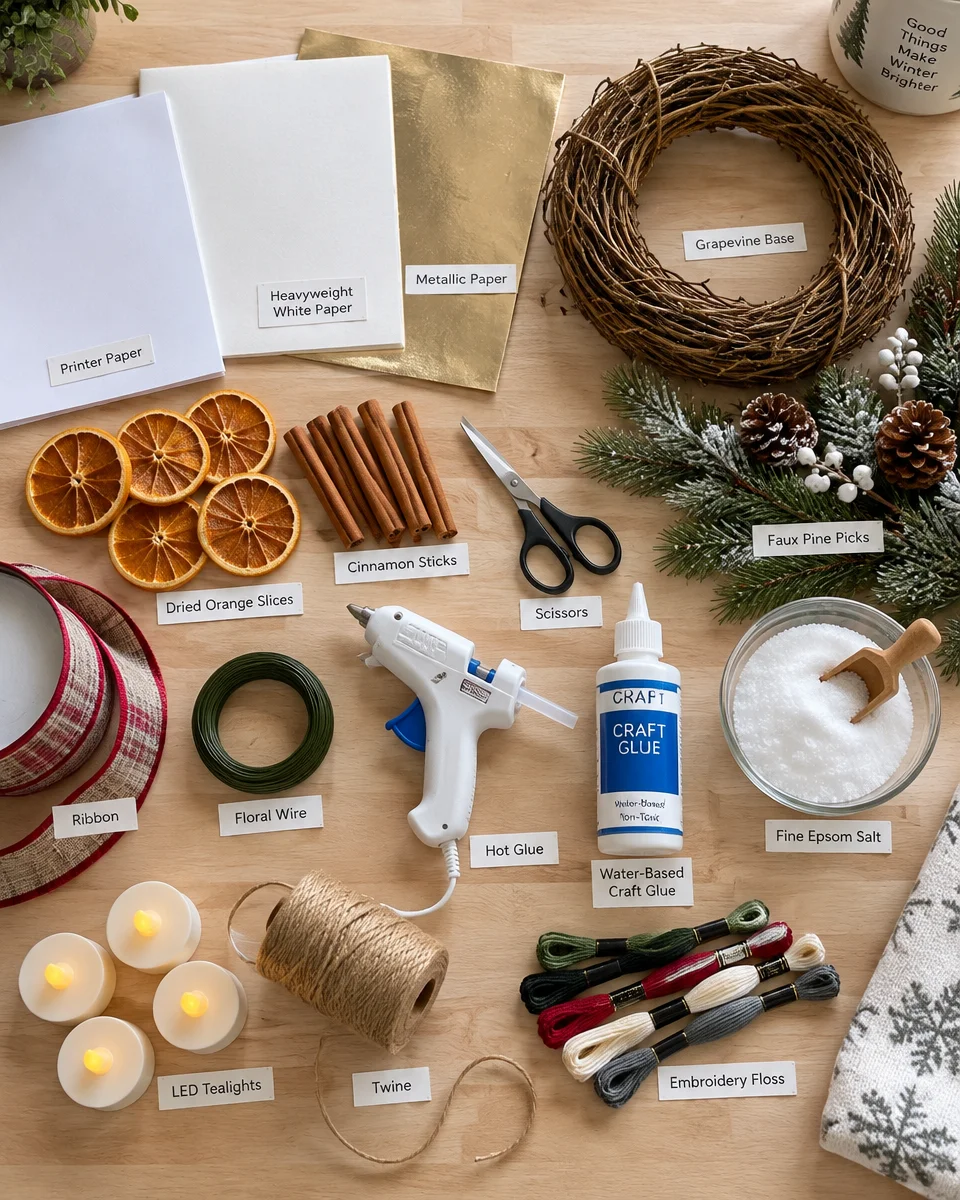
A winter wreath does not need fresh greenery to look beautiful. A grapevine base is forgiving and easy to decorate with faux pine picks, ribbon, pinecones, and other lightweight seasonal accents. Use floral wire to secure larger pieces, making sure cut wire ends are tucked safely into the wreath so they do not stick out.
Troubleshooting: If your wreath looks uneven, step back six feet and rotate it. Add one larger focal cluster (for example, pine plus pinecones plus a bow) and then balance the opposite side with smaller repeats.
Candle and Jar Crafts
Winter jar luminaries are a simple way to add a soft glow to winter decor. You can create a frosted effect with a craft product designed for glass, following the manufacturer’s application and drying instructions. Finish the luminary with a battery-operated LED tealight, especially when the jar includes paper, ribbon, twine, or other decorative materials.
Yarn and Felt Crafts
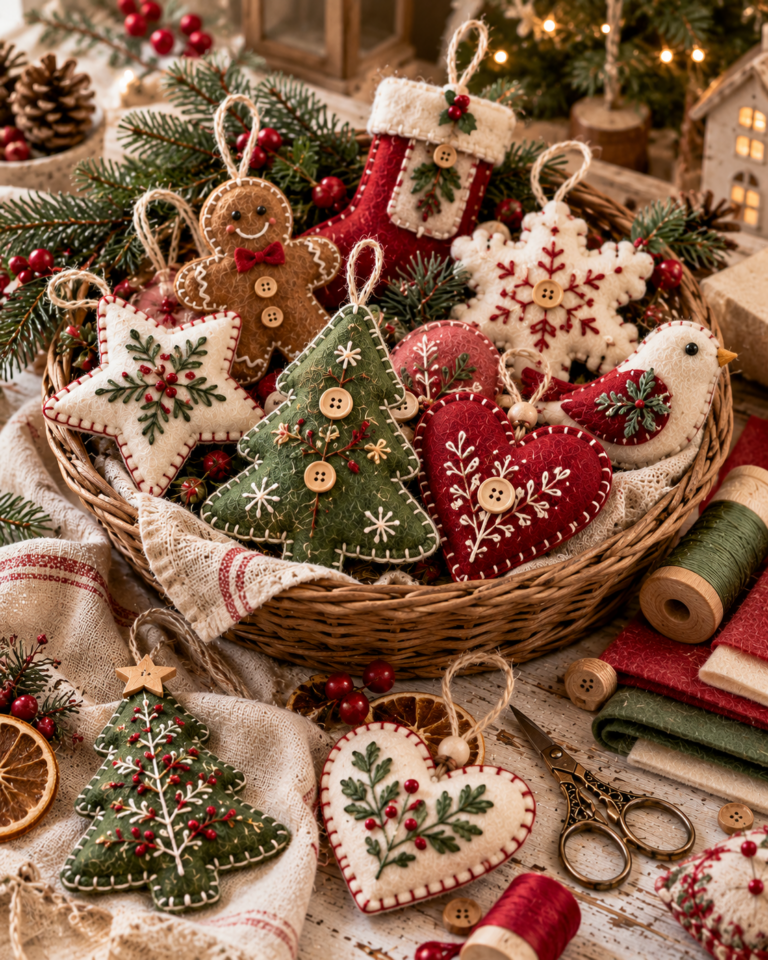
Yarn and felt are ideal for winter crafts for adults because they feel cozy and hide minor mistakes. Try felt ornaments, no-sew garlands, or a yarn-wrapped wreath form. Felt cuts cleanly with sharp scissors and does not fray. Use blanket stitch with embroidery floss if you want a handcrafted edge, or fabric glue for a no-sew version.
Winter Home Decor
Think small upgrades that make a room feel seasonal: a table centerpiece, a mini bunting for a mantel, or a framed paper cutout scene. For a winter centerpiece, combine a few elements with different heights, such as an LED luminary, a small vase of greenery, and a bowl of pinecones. Varying the height and size of the pieces adds visual interest without making the arrangement complicated.
Handmade Gifts
Gifts are easier to make in batches when you choose a repeatable project. Felt ornaments, simple yarn crafts, and decorative LED luminaries can all be made as small matching sets. Cutting and assembling similar pieces together can also help the finished gifts look consistent. Add a simple tag with relevant care information or materials when the recipient may need to know how the item should be handled.
What Crafts Are Good to Do in Winter?
The best winter crafts for adults fit three goals: they are comfortable to do indoors, they use materials that store well, and they add warmth or light to your space. Winter is perfect for crafts that involve texture, layering, and slow, relaxing steps. Projects like wreaths, garlands, ornaments, and paper decorations work well indoors because they can be made at a table and paused when needed. Paper crafts are especially convenient when you want a project with simple supplies and relatively easy cleanup.
If you want a craft that feels meditative, choose repetitive actions like cutting paper patterns, wrapping yarn, or hand-stitching felt. If you want a craft with a strong practical result, go for home decor: jar luminaries, winter centerpieces, or a simple wall hanging. Also consider your drying time and ventilation. Water-based paints and glues are easy indoors, while spray paint and solvent-based finishes should be used outside or in a well-ventilated space with appropriate protection.
Simple planning tip: Pick one main material—such as paper, felt, yarn, or faux greenery—and use it across a few projects. This can reduce leftover supplies and make it easier to reuse the same tools and techniques.
What Winter Crafts Can You Make at Home?
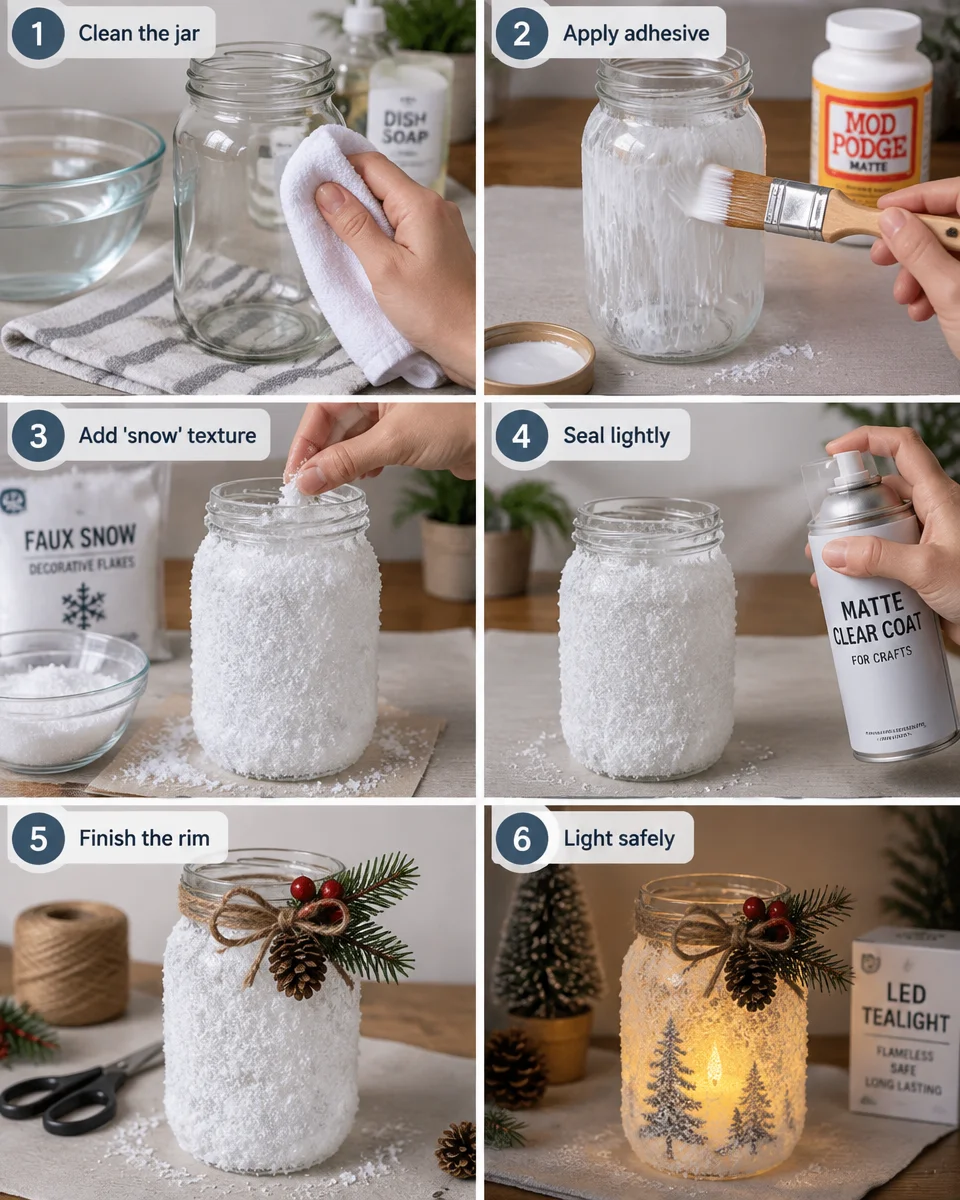
You can make a lot of winter crafts for adults at home with basic supplies, and success comes from setting up your workspace before you start. Clear a flat surface, protect it with a craft mat or cardboard, and gather tools in a small tray so you are not hunting for scissors mid-step. Here is a reliable at-home project that looks high-end: a frosted jar luminary.
- Clean the jar: Wash the jar and let it dry completely before decorating.
- Create the frosted finish: Use a craft product specifically designed to create a frosted or textured effect on glass. Follow the product directions for surface preparation, application, drying, and ventilation.
- Add decoration: Once the finish is completely dry, add ribbon, a paper tag, or another lightweight decoration around the outside.
- Add the light: Place a battery-operated LED tealight inside the jar.
- Finish and display: Check that all decorations are secure before placing the luminary on a stable surface.
- Light safely: Use an LED tealight for the safest glow, especially if you added paper or dried botanicals.
Variation: Add simple stars or snowflakes to the outside using a craft product suitable for glass, following its application and drying instructions.
What Can You Make With Yarn in Winter?
Yarn is one of the most versatile winter materials because it instantly reads “cozy,” and you can make beautiful items without advanced knitting skills. For winter crafts for adults, the easiest yarn wins are wrapping, tassels, pompoms, and simple weaving. A yarn-wrapped wreath is a great example: wrap yarn around a foam wreath form, keeping tension consistent so the foam does not show through. Secure the beginning and end using a method suitable for your wreath base, such as tying the yarn securely or using an appropriate craft adhesive according to its directions.
You can also make mug cozies using thick yarn and a large crochet hook if you know basic single crochet, or you can create a no-knit version by cutting a rectangle of felt and lacing chunky yarn through punched holes. Pompom garlands are another winter favorite: make multiple pompoms, tie them to a length of yarn, and drape over a mantel. Use the same color family for a modern look, or mix neutrals with one accent color (like cranberry or pine green).
Material note: Wool, wool blends, cotton, and acrylic can all create different textures and finishes. Check the yarn label for care instructions, especially if the finished project will be washed. If you’re giving the project as a gift, including the fiber content on a small tag can also be helpful.
What Winter Crafts Are Budget-Friendly?
Budget-friendly winter crafts for adults are all about using what you already have, choosing low-cost base materials, and making projects that look intentional. Paper crafts are the cheapest per item, especially if you use white printer paper and upgrade only the final version. Cardboard can become sturdy templates for cutting consistent shapes. Old sweaters or scarves can sometimes be repurposed into rustic ornaments, depending on the fabric. Because some knitted fabrics unravel or fray when cut, test a small section first and choose a project that suits the material.
Shop your home before buying: jars become luminaries, leftover ribbon becomes ornament hangers, and brown paper bags can become gift tags or paper stars. For wreaths, a grapevine base costs more than a wire frame, but a wire frame can be wrapped with scrap fabric strips or yarn, then decorated with a few focal picks rather than covering the whole thing.
- Use a simple foundation palette: White, kraft brown, beige, and gray can create a calm winter base and make one or two accent colors stand out.
- Buy one “hero” item: a quality ribbon spool or a small bundle of faux pine picks, then stretch it across multiple crafts.
- Choose projects with leftovers you can reuse: felt scraps become mini hearts or stars, and extra yarn becomes gift tie or tassels.
Cost-saving finishing tip: A crisp bow and a simple tag can elevate the most basic project, so spend time on neat trimming and clean knots.
What Are Good Winter Crafts for Beginners?
If you are new to winter crafts for adults, start with projects that have forgiving materials and simple techniques. Paper snowflakes, felt ornaments, and jar luminaries are excellent because errors are either invisible or easy to redo. Beginners often struggle with rushing, so pick a craft where you can pause without ruining it. Felt and yarn are especially kind: you can reposition glue, re-tie knots, and hide seams with a stitch or ribbon.
A strong beginner approach is to do a quick practice run. For example, cut one test snowflake from scrap paper before using nicer paper. If you are making a wreath, lay out all components on the base without attaching anything. Take a photo, then adjust until it feels balanced. This “dry fit” step prevents the most common beginner issue: committing too early and then trying to rip things off.
Beginner safety note: Use cutting tools only on an appropriate work surface and follow the manufacturer’s directions for any heated or powered craft tools. Choose the simplest tool that will do the job, keep your workspace uncluttered, and allow paints, adhesives, and finishes to dry or cure according to their product instructions.
How to Turn Winter Crafts Into Handmade Gifts
Turning winter crafts for adults into gifts is mostly about consistency and presentation. Choose one project style and make it in a small set, rather than making five different things. Sets feel thoughtful and intentional, and they make your work look cohesive even if the individual items are simple.
- Pick a theme and color palette: For example, “Scandi winter” (white, kraft, gray) or “classic holiday” (green, red, gold). Limiting colors keeps your gifts looking refined.
- Keep sizes consistent: Use a paper template for repeated ornament shapes and measure ribbon lengths when making a matching set. Repeating the same proportions helps the finished pieces look cohesive.
- Add a durable finish: If you painted, let it cure fully. If you used glue, allow complete dry time so items do not stick to packaging.
- Package to protect: Wrap ornaments in tissue and place in a small box. Jar crafts should be cushioned so the frosted finish does not scrape.
- Include a small care tag when needed: If the project has specific handling or cleaning requirements, add a short note based on the materials and product instructions you used.
Extra touch: Attach a mini ornament to the outside of a wrapped gift. It becomes part of the wrapping and a keepsake at the same time.
Frequently Asked Questions
How do I keep paper snowflakes from tearing when I unfold them?
Most tearing happens when the paper is too thin or the cuts are too close together. Use slightly heavier paper for your final versions and avoid cutting long, skinny bridges that have to support the whole design. When you unfold, do it slowly and support the center with your fingers. If you want very delicate designs, cut fewer layers by folding less, or switch to a sturdier paper like lightweight cardstock.
What is the safest way to use candles in winter jar crafts?
For decorative winter jar crafts, battery-operated LED tealights are the simplest option because they do not introduce an open flame next to paper, ribbon, twine, dried plants, or other craft materials. Choose a light that fits comfortably inside the jar and follow its product instructions.
My wreath decorations keep falling off. What am I doing wrong?
Heavier decorations may need more support than adhesive alone can provide, especially on a textured grapevine base. Floral wire can help secure larger picks or pinecones. Make sure the decorations are firmly attached and tuck any wire ends safely into the wreath so they do not protrude.
How can I make felt ornaments look neat if I am not good at sewing?
Cut clean shapes using a template and sharp scissors, and keep your seam allowance consistent. If you are sewing, use embroidery floss and simple blanket stitch with even spacing. If you prefer no-sew, use fabric glue sparingly and press edges together with clips while drying. Add a small ribbon, button, or stitched line detail on the front to distract from any tiny edge imperfections.
What should I do if my frosted jar finish looks patchy or streaky?
If the frosted finish looks uneven, check the instructions for the product you used before applying another coat. Surface preparation, application thickness, drying time, and temperature can all affect the result. Let the existing finish dry or cure completely, then follow the manufacturer’s directions for recoating or correcting uneven areas.
How far in advance can I make winter crafts for gifting?
Many paper, felt, yarn, and wreath projects can be prepared ahead of time if they are stored clean and dry. Keep paper crafts flat, protect wreaths from dust and crushing, and keep decorated jars away from moisture. If you use paint, adhesive, or a finishing product, follow its stated drying or curing time before wrapping or storing the finished craft.
Conclusion
Winter is a wonderful season for slowing down and making something beautiful, and winter crafts for adults do not have to be complicated to look polished. Pick one project that matches your time and space, gather materials, and do a quick test run before committing to your final pieces. Focus on clean cuts, secure attachments, and safe lighting choices, and you will end up with crafts you are proud to display or give away. Your next step is simple: choose one idea from this guide, gather the basic materials, and start with the easiest version. Once you understand the process, you can repeat the project, try another material, or turn it into a matching set.

Today Craft Ideas
Sharing simple craft ideas, seasonal inspiration and creative projects for everyday life.